Saturday, 26 August 2017

Sapa

We headed back to Vietnam for a week to visit the northern provinces, as lots of people told us that the Sapa and Ha Giang areas are unmissable.

Sapa is a five hour bus ride from Hanoi. We were a bit hungover thanks to a chance encounter with some Kiwi friends, and cheap bia hoi (draught beer for about 30 cents a glass). As a result Torrey got extremely car sick on the windy roads up the mountains.

The scenery is pretty epic in this region- steep mountains and bright green terraced rice paddies. The region is home to ethnic people such as the Dao, H'Mong, Giay and Tay. These brightly dressed people have villages scattered about the mountains.

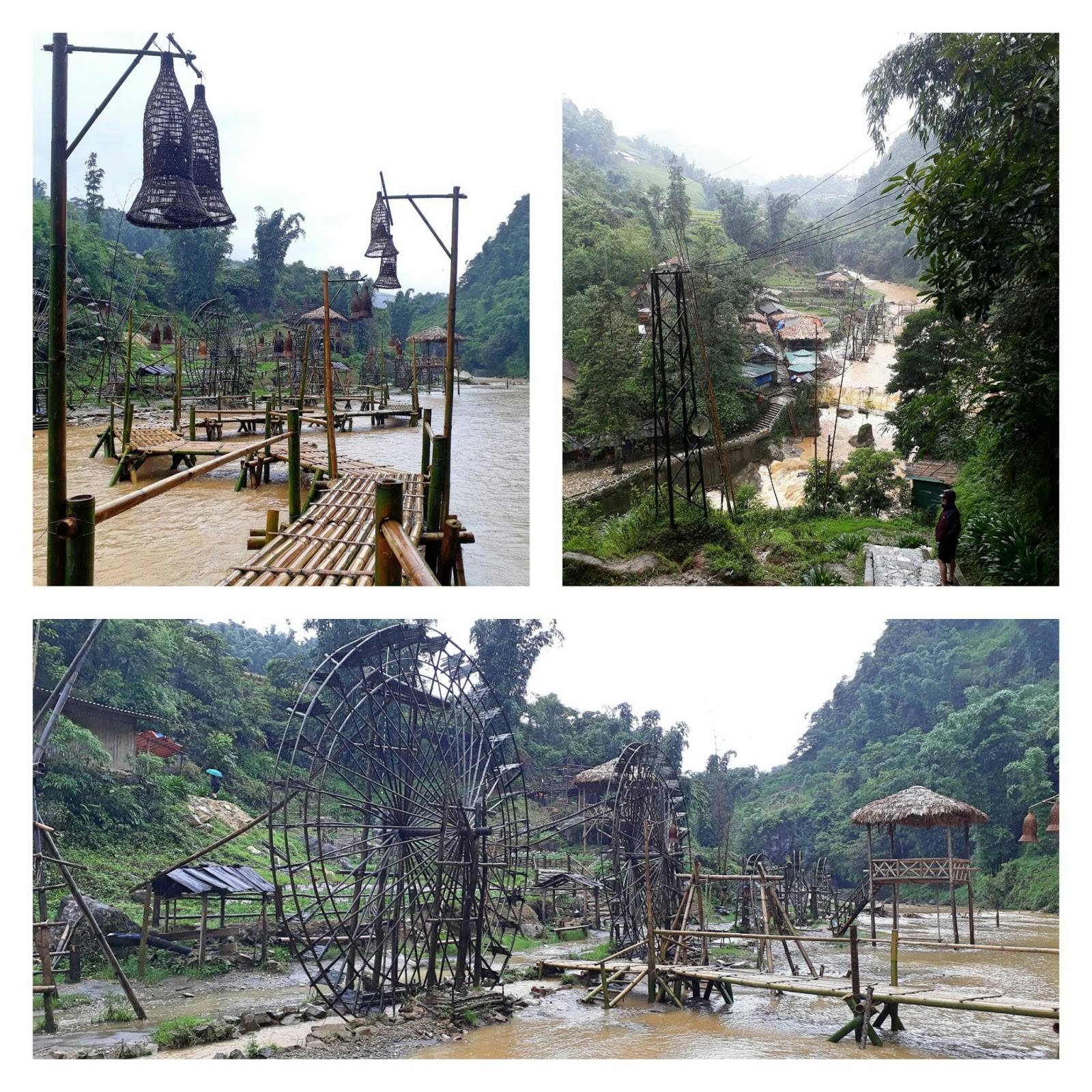
We visited Cat Cat village, the closest to Sapa. There is a river cascading through the middle which traditionally generated hydro power for their mills which they have left intact even though there is now electricity.

We drove out past Lao Chai and Ta Van villages. The scenery is stunning on this road, and the locals were friendly, but very interested in pestering tourists to buy handicrafts.

The rain was fairly relentless, and the clouds obscured the mountain tops. Therefore we unfortunately didn't get to take the world's longest cable car to the peak of Fansipan (6km long up to a peak of 3000m), as the mist was too heavy.

After a couple nights in Sapa, we spent a night in the town of Bac Ha, famous for its Sunday markets. We didn't buy anything, but then again we weren't in need of any corn, herbal medicines, chickens or water buffalo.

Friday, 25 August 2017

Kunming

Due to poor planning, laziness, and some miss reading of plane tickets, we spent quite a few days in the Yunnan capital of Kunming. It is a nice enough city (with a great temperate climate), but we could have made it back to Vietnam overland if we had of been more organised. We made the most of our time there by exploring the city, including local cuisine. 
We had hot pot, simmering broth in which you cook meat and veg skewers. At one restaurant we had personal pots on small electric hobs, with skewers to choose from rotating on a conveyer belt. 

We also had "over the bridge noodles". This dish is named for a local story where a woman took her husband noodles for lunch each day over a bridge to his workplace. She would mix it up each day by adding in different meats and vegetables. Our noodles came with a dozen odd plates of sides to mix in. If you pay for the deluxe bowl, it all comes served on an actual mini bridge.

We did some sightseeing around the city. There is a large central park where everyone gathers to dance to folk music on the weekend. We visited an ancient temple, where we were a little naughty and decided to liberate a caged wild bird.

This was our last stop before returning to Vietnam, so we have included some photos of Chinese meals we had, and inexplicable knock-off New Balance shoe shops.

Thursday, 24 August 2017

Yangtze River

We splashed out on our first ever cruise, three nights on the Yangtze River from Chongqing to Yichang via the three gorges and the biggest dam in the world.

We had our own room with balcony, three buffet meals a day, and evening shows. It was pretty relaxing after a few weeks of long distance travel and communication challenges. There were 400 onboard, including 50 foreigners. We even met a family of Kiwis from a neighbouring suburb in Wellington. Parents Rowena and Stuart were visting son Hamish and partner Claudia who are teaching in Fu Zhou. It was nice to hang out with some friendly Westerners after a few weeks of being pretty isolated without any Chinese skills.

The three gorges were spectacular, even though they have lost some of their grandeur with the dam raising the river level by 80m. The dam is the largest in the world, and is an incredible engineering feat. Whole towns had to be relocated to higher ground.

Each of the three gorges are known respectively as the most beautiful, most magnificent, and most dangerous.

We made a couple daytime excursions from the ship. One to an ancient temple, saved from the elevated water levels by concrete stop banks. We took a small boat to visit a tributary called "Goddess Stream" a.k.a little three gorges. These gorges were as high as the main stem of the river, but more impressive as parts of the gorge were only 30m wide.

The last night of the trip we passed through the locks of the dam. It took about three hours to make it through five stages of locks, although we went to bed after the first one.

Chongqing

We had one night in Chongqing, so we spent an action packed day exploring this enormous city right on the Yangtze. It seemed like a pretty cool city with lots going on. Although it was, to quote Willis McDonnell, "hotter than hell!"
There was a fun cable car ride across the river with excellent views of the city. We quickly found an air conditioned beer bar, with Goose Island IPA on tap! They also had dice, so we got into our favourite dice game Greedy. We stayed at a slightly weird hostel, which seemed more like an AirBNB in a small flat in a high rise tower, but it was interesting to see how young urban Chinese people live.

Wednesday, 23 August 2017

Bamboo Sea

Deep in Southwest Sichuan, there is a national park specialising in bamboo. There is a veritable 120 km2 sea of it. Apparently in the spring it grows so quickly (up to a metre in 24 hours) you can hear popping noises.

We stayed inside the park, and spent a day exploring. A 20 minute cable car took us up to a high point, where there was an eight story tower that took us higher. The views were pretty epic, the many shades of green bamboo do look like a sea.

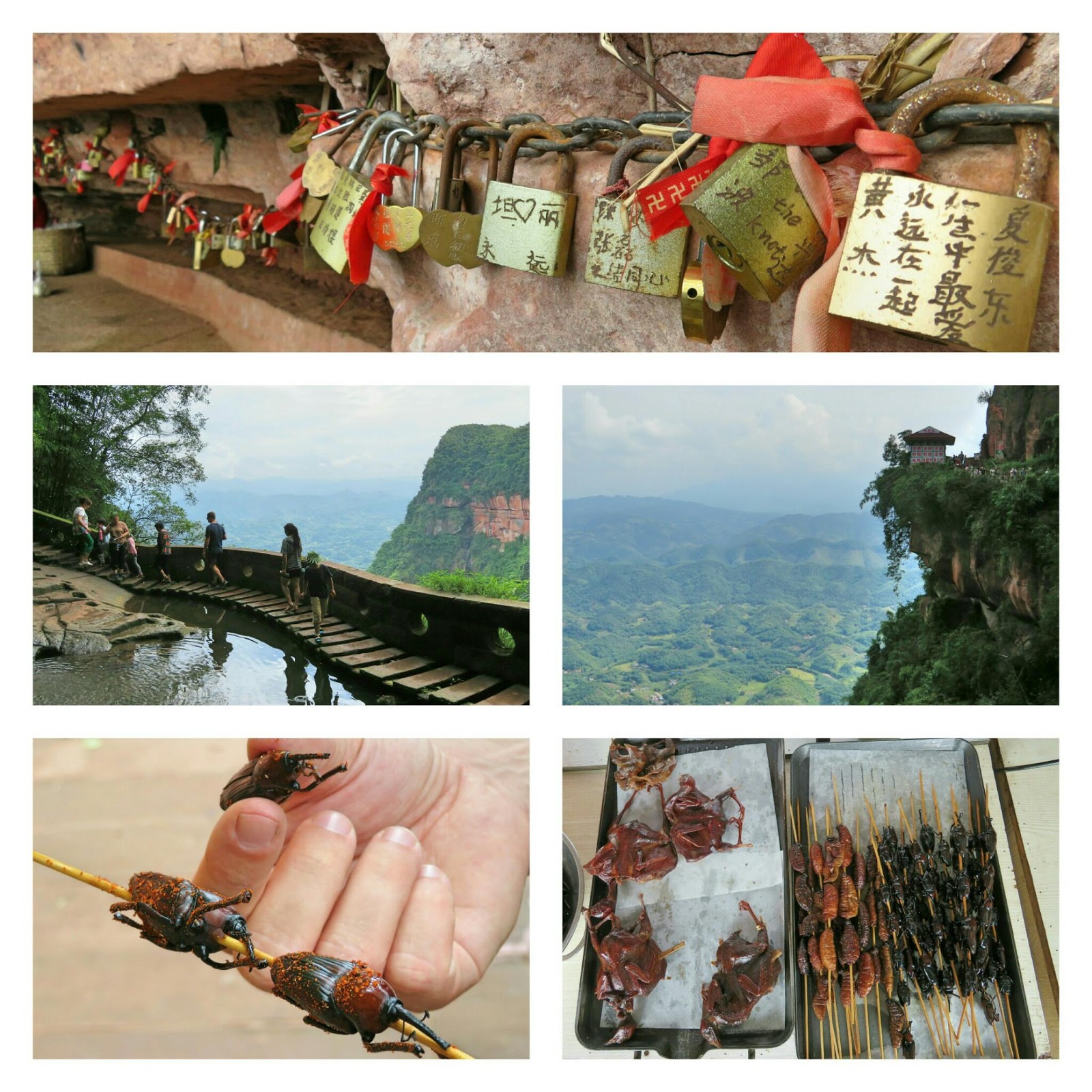
We strolled through the forest to another cable car that took us across a canyon to the far side of the park. There we found an hour long walkway on the side of the cliff with temples, and bas relief carvings of ancient battles and a stunning view if the countryside. In any other country, this would be a top attraction in itself. In China, it doesn't even get a mention as one if the top attractions in the park!

Lizhuang

We made our way from Chengdu to Yibin, our first sight of the mighty Yangtze, then got another bus downriver to Lizhuang. Finding the town, then our accommodation was a challenge due to communication and technological difficulties. One if the hotels wouldn't take us although obviously empty, they walked us to a better hotel on the river that was half the price. We were suspicious of the price due to fancy decor and stunning views. This ended up being one of our best hotels in China costing only 160 Yuan, or $32.

Lizhuang is a heritage town, they have tastefully kept buildings as they were 100 years ago while allowing shops and restaurants to continue. This town was where many of China's cultural artifacts were stored during Japanese invasion in WWII.

We spent a morning strolling around the ancient alleyways and courtyards. We visited the Zhang family hall where many artifacts were stored and there is now a museum.

The town itself has a very relaxed vibe. The locals dance on the waterfront each night, and the food is delicious. We had a meal of bairou, thin sliced pork with spicy dip (a local specialty). We ordered other stuff by just pointing at the menu, ending up with fried peanuts and chillis, and a whole fish.

Sunday, 20 August 2017

Leshan and Emei Shan

We visited two very popular, and therefore very crowded, Chinese attractions.
The grand Buddha of Leshan is 71 metres high, and was carved out of a cliffside 1200 years ago. It is huge and a sight to behold, especially if you have time and energy to fight the crowds to the base (which we didn't). On the site are various other temples and caves. One temple we visited had 1000 lifelike arhat statues (buddhist angels).
Emei shan is an hour from Leshan, and is a 3099m high mountain, and another very holy site for Chinese buddhists. It took 5 hours of buses, cable cars, and shuffling along in queues to reach the top (plus $150). It was worth it though for the views and to stand in front of the massive 10 faced golden statue at the top.